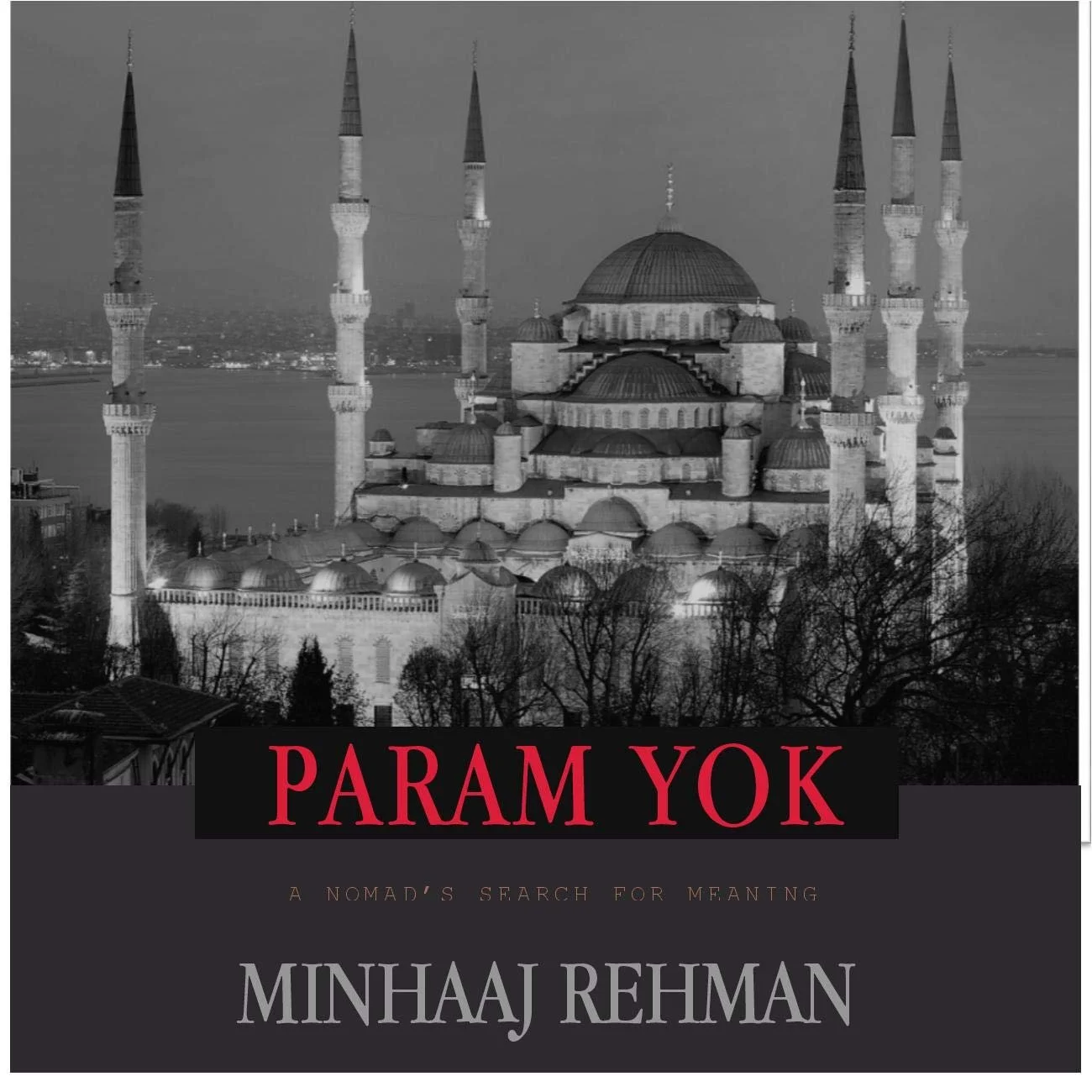
Param Yok
A Hitchhiker's Diary of Hunger, Borders, and Human Kindness
A Journey Written in Hunger
Param Yok is not a romanticized travel book. It is a diary of bread, borders, bureaucracy, and the fragile miracle of human kindness. Written on the road with nothing but faith, fatigue, and strangers to depend on, Minhaaj Rehman turns poverty into a lens that reveals what abundance often hides.
"When Lisa knew about my pennilessness and nutella, snickers, tuna and bread being my daily food, she turned into tears and I was sorrier for her than myself."
From this blunt confession emerges the philosophy of the book: having nothing strips life down to its essentials — dignity, memory, and kindness.
Not Tourism, But Testimony
Param Yok stands in the lineage of Orwell's Down and Out in Paris and London and Kapuściński's Travels with Herodotus. Like them, it resists polish and instead documents the raw.
"In the evening we made a pizza with some of the friends, a conglomeration of Hungarian, French and German 22 year olds! … It was so Erasmus! … What does an 18 year old do when you hand him 500 euros a month and dispatch him to another country without supervision? Exactly, he's going to drink and fuck it around."
These moments of cultural collision — between poverty and privilege, exile and belonging — make Param Yok more than a hitchhiker's diary. It is a meditation on what societies value, and what they discard.
Borders, Alphabets, Exile
"Cyrillic script was nothing more than symbols to me. Not a language, but a code, incomprehensible, impenetrable, and I felt I was already guilty for not knowing it."
The border becomes not just a line on the map but a psychological trial, testing whether one belongs or forever remains the outsider.
The Road Across 8 Countries
Facing racism and discrimination in Sweden, Minhaaj hitchhiked out of Europe toward Turkey — crossing 8 countries in two months. Teaching German in Slovenia, running into hippies in Hungary, invited in by his rides for coffee in Bulgaria. His stupefying cultural shocks and experiences of profound humanity make this an unforgettable tale of a young Pakistani student travelling in a paranoid world.
This is not Kerouac's beatific "On the Road." It is survival on the road, written in the idiom of hunger and hope.